





The story of the Toyota Hiace being the backbone of public transport here in Kenya began back in the 1990s. It was among the brands that transformed the matatu culture, where it replaced the popular “face me” matatus; in other words, just a modified 1980s Toyota enclosed body pickup truck where seats were integrated side by side with the door behind and windows installed.
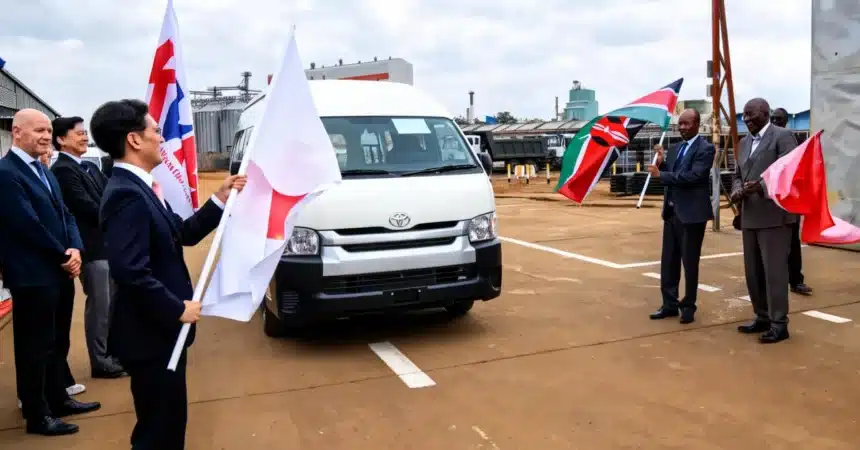
The Hiace isn’t the first time to assembled in Kenya, and for all that time, it was been done by the Associated Vehicle Assemblers (AVA.). Just yesterday, Lee Kinyanjui CS of the Ministry of Investments, Trade, and Industry (MITI) in Kenya was involved in the launch of the local assembly of the Toyota Hiace, probably for the 2026 to 2027 model year.
The assembly will take place at the Kenya Vehicle Manufacturers (KVM) in Thika, and according to the CS, it marks a major milestone in Kenya’s industrial journey. He added on, saying that the assembly of the vehicle will be more than it is, as it will be involved in creating jobs, strengthening local industries, building technical skills, and growing Kenya’s manufacturing capacity.
The Kenya Vehicle Manufacturing so far has employed more than 200 people, and with the plans for expansion, the employment figures are expected to rise. Even though we couldn’t tell if they will be assembling an electric minibus or just a combustion vehicle, they won’t be the first ones to do so.
On the same segment, Basi Go had unveiled its intent of local assembly of Ma3 matatus by shipping CDK kits, a move that was described to be a development of local electric vans creating job opportunities.
BasiGo Ma3 won’t be a direct competitor of the Toyota Hiace but a clear headache to Toyota’s team if they go with the combustion engine. Looking at current fuel pricing in Kenya, which is unstable over time, investors may tend to go in the electric vehicle direction also looking at Nairobi, positioning itself at the center of greener mobility would be another challenge.
Just 4 months ago, the Isuzu MU-X assembly was launched for the first time it is done in Kenya. This move saw its pricing drop from Kenya shillings 13.5 million to 9.9 million. Just like the Mux, the new Toyota Hiace, we expect its pricing to be below 5.7 million in the current market after customization (filling the empty van or minibus by adding seats and other features).
Finishing up, he continued and talked about local vehicle assembly, which creates room for locally produced components, which will open opportunities for suppliers, manufacturers, and small- to medium-sized enterprises who will be involved in the automotive value chain.