

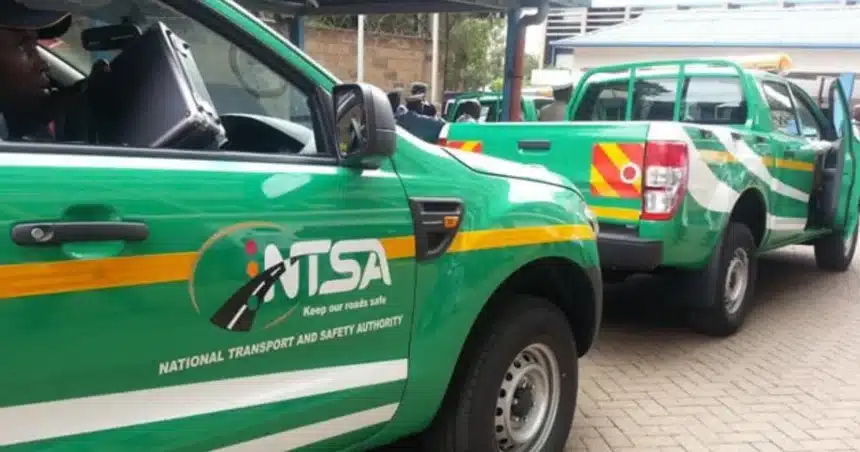
Under the new regulations that were introduced previously by the National Transport and Safety Authority (NTSA), all motorists will be required to subject their vehicles to a mandatory vehicle inspection.
The regulations will be effective on July 1, 2026, and will require all privately owned and government vehicles older than four years from the time they were manufactured to be subjected to an inspection procedure each year.
To the public service vehicles (PSV), school vehicles, locally assembled vehicles, vehicles that have been modified, and vehicles that have been involved in accidents, the regulations still revolve through them.
In a statement by NTSA, Kenya has recorded more than six million vehicles in their database, and based on inspection charges by the authority, the government could collect Ksh 12 billion annually if the registered vehicles in the database fall under the categories of the vehicles that could undergo inspection. The charges are Ksh 1000 for booking and Ksh 1000 for the inspection fee.
For some vehicles, the required charged amount could be lower since they fall under 2 wheels or 3 wheels, which attract lower charges of Ksh 200 for booking and Ksh 300 for inspection.
For vehicles used in agricultural practices, motorized pedal cycles, golf carts, and all-terrain vehicles aren’t included in the inspection. In addition, the vehicles that are pending for re-registration, the ones missing from NTSA online records, and the ones pending for ownership transfers will be included in the inspection.
Vehicles that pass the inspection will be issued inspection stickers and a report, and the report may be included in the NTSA digital interface. It’s prohibited to operate any vehicle on public roads without a valid inspection sticker as indicated in the regulations.
If found operating the vehicle without a valid sticker, one commits an offense and will be liable to penalties as indicated under the traffic act. For vehicle owners whose cars may not pass the inspection, they will receive a defect inspection report with details of repairs that need to be undertaken before another inspection is undertaken.
The regulations provide a period of 14 days during which re-inspection at inspection centers will conduct the services free of charge. If you fail to retake your vehicle to inspection after the 14-day period at a different inspection center, you will be required to pay fresh charges.
Finishing up for a person convicted of the offense under the NTSA regulations risks imprisonment for a term not more than 6 months or a fine not exceeding KSh 20,000, sometimes both.