


The National Transport and Safety Authority (NTSA) has unveiled a new enforcement framework for minor traffic offenses that’s expected to take effect starting June 1, 2026. This new initiative comes months after a previous notice regarding traffic enforcement was instantly withdrawn.
NTSA, alongside the National Police Service (NPC), the Office of the Director of Public Prosecutions (ODPP), and the judiciary, will form a joint team in implementing the framework aiming to curb corruption across the country and enhance road safety.
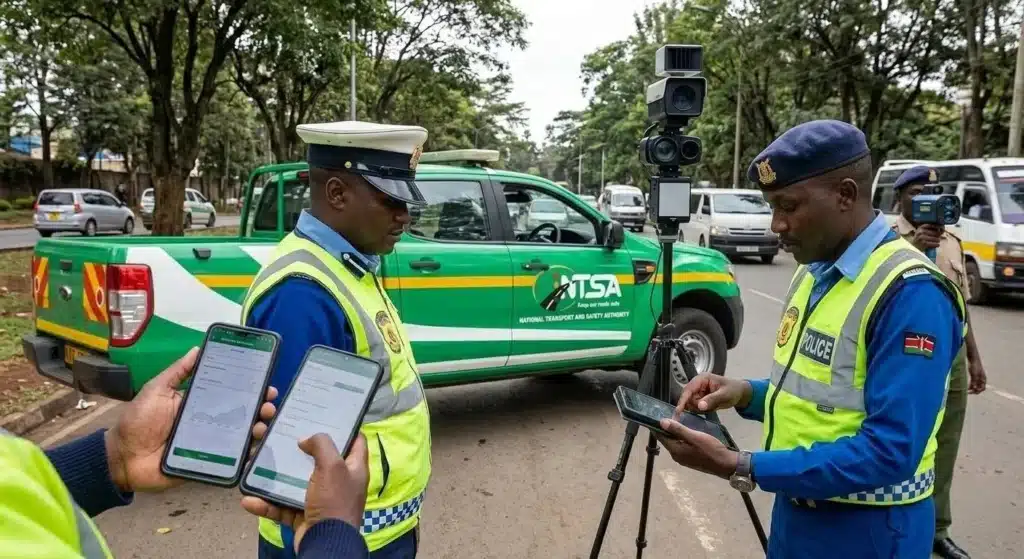
Under the new system, motorists who are found with minor traffic offenses will no longer face immediate or mandatory court appearances. Instead, they will receive official police notification of the traffic offense committed. The violations can be detected by police officers during enforcement or via an automated digital monitoring system and automated traffic cameras.
The driver or registered vehicle owner will receive this notification through multiple channels, including physical delivery of the documents by a police officer; if no one is available, they can attach to the offending vehicle; they can also notify via SMS, email, or any approved digital enforcement platforms.
NTSA has urged motorists to ensure that their contact details in the vehicle registration database are accurate to ensure they receive critical notifications. Each notification will have the specific offense committed, the date, time, and location of the incident, the standard penalty fee, and the required payment instruction.
Motorists can either choose to admit liability and pay the designated fine out of court or dispute the allegations in court. To guarantee fairness, the driver or car owner has the right to review the supporting digital evidence (video or image) before making a final decision.
However, NTSA warns that failing to respond to the notification or failing to appear in court when required will result in severe legal consequences that will attract more penalties. The Authority has assured the public that all personal data collected under their system will be handled in adherence to the constitution and the Data Protection Act.